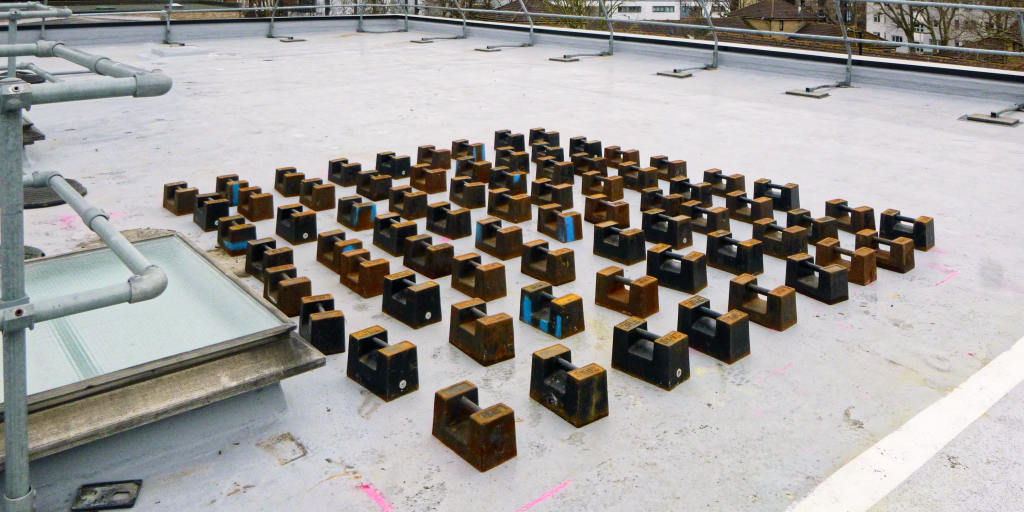
Load testing is a practical method for evaluating a structure’s performance under controlled loading. It is often used when calculations alone are insufficient, the existing structural capacity is uncertain, or physical evidence is required to confirm performance.
During a load test, a known load is systematically applied to the structure. The element’s response is then monitored, typically by measuring deflection, movement, cracking, strain or other relevant behaviour. This enables engineers to assess whether the structure meets acceptable limits and is suitable for its intended purpose.
Why Load Test
Load testing is particularly valuable in scenarios such as:
- Unknown or undocumented structural capacity
- Changes in use or increased loads
- Suspected defects or poor performance
- Fire, impact, bomb or accidental damage
- Verification of repairs, strengthening works or alterations
- Assessment of floors, slabs, beams, balconies and other structural components
Load Testing Methods
Various loading methods are employed depending on the required load, site access, structure condition and logistical constraints. These include kentledge loading, water loading, hydraulic jacking and calibrated weights.
Throughout the test, deflection and movement are monitored using electronic displacement gauges (LVDTs). Where necessary, crack widths, strain, temperature and recovery after unloading may also be recorded.
Validating Structural Performance
Physical load testing provides direct evidence of real-world structural performance. It helps confirm design assumptions, identify weaknesses, demonstrate compliance with standards and build confidence in the structure’s ability to safely withstand the required loads.
Sandberg offers load testing services ranging from smaller component tests to large-scale structural load tests.