
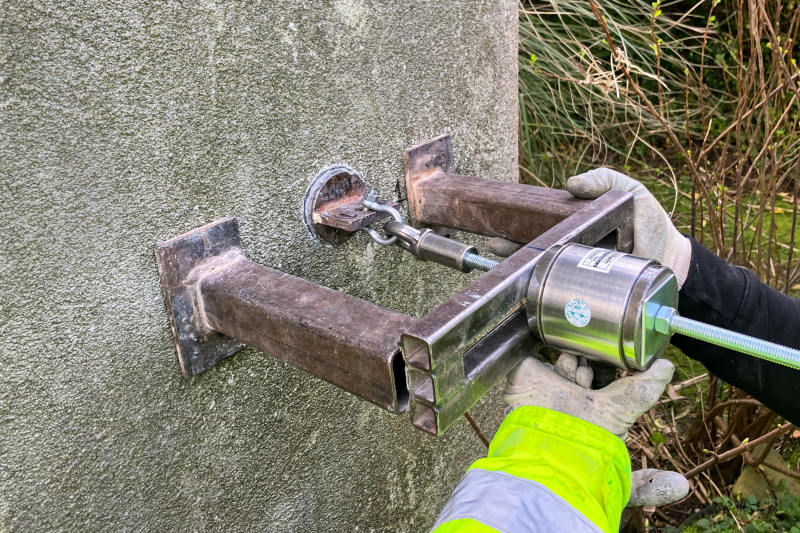
Bond Strength Testing
Bond strength testing is used to assess the bond between applied finishes, renders, plasters, insulation systems, tiles, repair materials, or other bonded layers and the underlying substrate.
Learn More…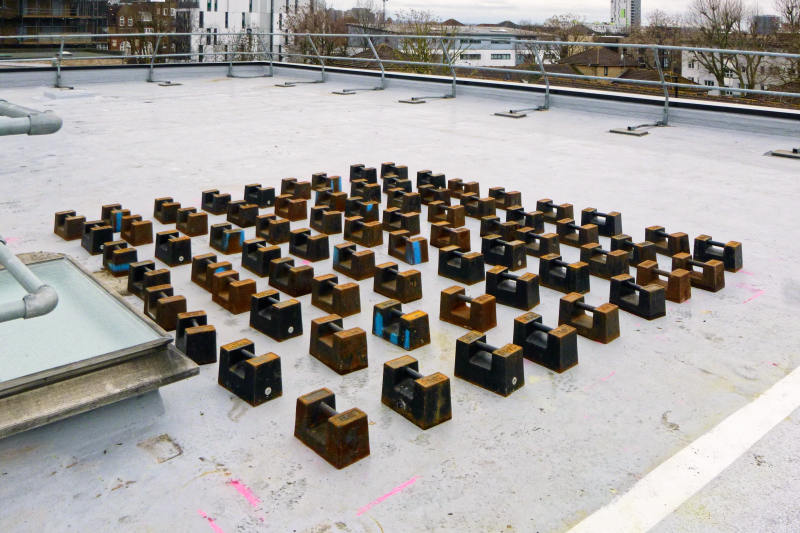
Load Testing of Buildings
Various loading techniques can be applied according to the weight required, the condition of the building and logistical limitations. Monitoring of deflections is undertaken either electronically or using dial gauges.
Learn More…
Barrier Testing in Buildings and External Balconies
Barriers in and around buildings, external balcony balustrading, and temporary edge protection systems are required to meet particular codes based on their design and location.
Learn More…
Testing of Car Park Barriers to BS 6180
Barriers should be designed and installed in accordance with the requirements of BS 6180:2011 ‘Code of Practice for Barriers in and about Buildings’.
Learn More…
Sports Ground Barrier Testing
Crush Barriers play an essential part in crowd control and safety at Sports Stadia. Stringent testing and inspection are therefore essential to ensure that their performance satisfies…
Learn More…
Impact Testing of Cladding Systems
Sandberg can undertake hard and soft body cladding system impact tests in accordance with the methods of BS 8200:1985 Code of practice for design of non-loadbearing external vertical enclosures of buildings.
Learn More…Door Opening Force Testing
Door opening force testing is used to assess whether doors can be opened without excessive force, particularly where accessibility requirements under Approved Document M apply.
Load Testing of Foundations and Components
Load testing of safety fences and safety barriers supporting posts and anchorages is required by DTp Specification for Highway Work Part 1 Series 400. Post foundation testing involves in-situ loading and monitoring of the angular rotation of the post and its support.
Learn More…
Impact Testing of Glass Panels
Glass barrier panels forming part of balconies, balustrades or parapets are required to meet the impact test requirements as laid down in BS 6180:2011 ‘Barriers in and about Buildings’ and…
Learn More…Pull-Out Testing of Fixings and Anchors
Pull-out testing is used to verify the strength, suitability, and installation quality of structural fixings, such as anchors and embedded components within a structure. The test involves applying a controlled tensile load to the fixing to assess its resistance to pull-out failure or excessive movement.
Learn More…Non-Fragile Roof Testing
Non-fragility roof testing is used to assess whether a roof assembly can safely resist the impact of a person stumbling or falling onto it. This is particularly important for roofs formed from potentially brittle or fragile materials or where there is uncertainty about whether the roof can be safely accessed for inspection, maintenance, or refurbishment.
Learn More…Shear Testing of Fixings and Anchors
Shear testing is used to assess how fixings, anchors, or mounted elements perform when subjected to a sideways or lateral load. It is typically required where fixings are designed to resist horizontal forces rather than direct pull-out loads.
Learn More…